
Warning
This document is current with effect from the date shown on the cover page. As the International Mine Action Standards (IMAS) are subject to regular review and revision, users should consult the IMAS project website in order to verify its status at (http://www.mineactionstandards.org/, or through the UNMAS website at www.mineaction.org)
Copyright notice
The International Mine Action Standards (IMAS) are owned, controlled and copyrighted by the United Nations. None of the materials provided in IMAS may be used, reproduced or disseminated, in whole or in part, in any form or by any means, without prior written permission from the United Nations acting through the United Nations Mine Action Service (UNMAS), except as set out below. None of the materials in IMAS are to be sold.
The use, reproduction or re-dissemination of IMAS by third parties, in whole or in part, is permitted provided that the United Nations is appropriately attributed and provided also that such use, reproduction or redissemination is not for commercial purposes. The United Nations may be attributed by the placement of the following text: Used and reproduced with permission of the United Nations.
Director
United Nations Mine Action Service (UNMAS)
1 United Nations Plaza New York,
NY 10017
USA
E-mail: mineaction@un.org
Telephone: +1 (212) 963 0691
Website: www.mineactionstandards.org
Foreword
International standards for humanitarian demining programmes were first proposed by working groups at an international technical conference in Denmark, in July 1996. Criteria were prescribed for all aspects of demining, standards were recommended and a new universal definition of “clearance” was agreed. In late 1996, the principles proposed in Denmark were developed by a UN-led working group and the International Standards for Humanitarian Mine Clearance Operations were developed. A first edition was issued by the UN Mine Action Service (UNMAS) in March 1997.
The scope of these original standards has since been expanded to include the other components of mine action and to reflect changes to operational procedures, practices and norms. The standards were re-developed and renamed as International Mine Action Standards (IMAS) with the first edition produced in October 2001.
The United Nations has a general responsibility for enabling and encouraging the effective management of mine action programmes, including the development and maintenance of standards. UNMAS, therefore, is the office within the United Nations responsible for the development and maintenance of IMAS. IMAS are produced with the assistance of the Geneva International Centre for Humanitarian Demining.
The work of preparing, reviewing and revising IMAS is conducted by technical committees, with the support of international, governmental and non-governmental organizations. The latest version of each standard, together with information on the work of the technical committees, can be found at www.mineactionstandards.org. Individual IMAS are reviewed at least every five years to reflect developing mine action norms and practices and to incorporate changes to international regulations and requirements.
Introduction
Animal detection systems (ADS) are a tool that may be used in land release processes to support technical survey (TS) and clearance. As an input to the land release process, ADS require testing in accordance with IMAS 07.12, Quality management in mine action, IMAS 07.30, Accreditation of demining organizations, and IMAS 07.40, Monitoring of mine action organizations, to confirm that they satisfy quality requirements, particularly in terms of their capability to detect explosive ordnance (EO) including, landmines and other target objects that may be specified by authorities and other stakeholders.
While ADS is a generic term, the only animals currently in use are dogs and rats. This document covers mine detection dogs (MDD) and mine detection rats (MDR) in the context of EO clearance. This IMAS recognizes that dogs may be used as MDD, technical survey dogs (TSD) or both.
This standard underscores the importance of rigorous, realistic, and transparent testing protocols designed to replicate the conditions ADS units will face in actual land release tasks. It requires realistic testing and regular reviews to maintain stakeholder confidence in ADS operations.
This document complements other standards in the IMAS series. These include IMAS 09.40, Principles, requirements and guidelines on ADS; IMAS 09.41, Operational procedures for ADS; T&EP 07.31/01/2022, Setting of animal detection systems testing sites; and T&EP 07.31/01/2022, Competencies required for animal detection systems (ADS) handlers, team leaders and instructors, which together form a cohesive guidance structure for ADS deployment, testing and safety in mine action contexts.
1. Scope
This standard sets out requirements and guidelines for the external accreditation and operational testing of animal detection systems (ADS).
This standard does not apply to the internal quality management (QM) processes of ADS organizations that are granted organizational accreditation, such as daily pre-work testing of ADS units, for example. ADS organizations should apply internal QM procedures outlined in assessed documentation for internal testing.
2. Normative references
A list of normative references is given in Annex A. Normative references are important documents to which reference is made in this standard and which form part of the provisions of this standard.
3. Terms and definitions
A complete glossary of all the terms, definitions and abbreviations used in the International Mine Action Standards (IMAS) series is given in IMAS 04.10.
In the IMAS series, the words “shall”, “should” and “may” are used to indicate the intended degree of compliance:
- “shall” is used to indicate requirements, methods or specifications that are to be applied in order to conform to the standard;
- “should” is used to indicate preferred requirements, methods or specifications; and
- “may” is used to indicate a possible method or course of action.
3.1
accreditation
<ADS> process by which an ADS organization is formally recognized as competent and able to plan, manage and operationally conduct animal detection activities safely, effectively and efficiently
3.2
accreditation body
organization, usually part of the NMAA, responsible for the management and implementation of a national accreditation system
3.3
animal detection system
ADS
combination of animals, handlers, supervisors, managers, equipment, facilities, policies, procedures and other associated functions, that interact to provide a tool intended to detect vapour from EO
3.4
animal detection system organization
ADS organization
organization (government, non-governmental organization or commercial entity) responsible for implementing mine action projects or tasks with the use of ADS
3.5
animal detection system unit
ADS unit
animal and its handler (under the direction and monitoring of team/site management)
3.6
explosive ordnance
EO
is interpreted as encompassing mine action’s response to the following munitions:
- mines;
- cluster munitions;
- unexploded ordnance;
- abandoned ordnance;
- booby traps;
- other devices (as defined by CCW APII);
- improvised explosive devices
Note 1 to entry: Improvised explosive devices (IEDs) meeting the definition of mines, booby traps or other devices fall under the scope of mine action, when their clearance is undertaken for humanitarian purposes and in areas where active hostilities have ceased.
3.7
mine action organization
MAO
organization (government, military, commercial or non-governmental organization/civil society) responsible for implementing mine action projects or tasks
Note 1 to entry: The mine action organization may be a prime contractor, subcontractor, consultant or agent.
3.8
mine detection dog
MDD
dog specifically trained to detect and indicate vapour from EO, normally in the minefield environment/setting
Note 1 to entry: Vapour may include vapour from the case material and other substances as well as from explosives.
3.9
mine detection rat
MDR
rat specifically trained to detect and indicate vapour from EO, normally in the minefield environment/setting
Note 1 to entry: Vapour may include vapour from the case material and other substances as well as from explosives.
3.10
national mine action authority
NMAA
government entity, often an inter-ministerial committee, in an country affected by EO, charged with the responsibility for broad strategic, policy and regulatory decisions related to mine action
Note 1 to entry: In the absence of an NMAA, it may be necessary and appropriate for the UN, or some other body, to assume some or all of the responsibilities of an NMAA.
3.11
recognition piece
metal piece, which is placed under test items to make them recognizable with a metal detector
3.12
soaking time
<ADS> minimum period that shall elapse between the burial of test items in the ground and its subsequent use for testing animal detection systems
Note1 to entry: The soaking time allows explosive-related odours to diffuse into the surrounding soil and atmosphere to a level that is detectable by animals.
3.13
target object
specified object that ADS units are required to detect during search and clearance operations
Note 1 to entry: A target object is an item that the ADS is required to detect in training, testing and operations.
3.14
target odour
scent from the target object or the test item
3.15
technical survey dog
TSD
dog trained and employed to detect mines and other EO and used with or without leash to distances greater than 10 m
3.16
testing box
area with a square or rectangular shape, clearly marked in its corners/turning points, used to establish quality of performance
3.17
test item
EO laid in the test site for detection by the animal detection site unit
Note 1 to entry: A test item is a target object that the ADS is required to detect in training and testing.
3.18
testing site
site at which a series of testing boxes or lanes are prepared for the purpose of operational accreditation testing of animal detection systems
4. Animal detection system accreditation process
4.1 General
The accreditation process of ADS organizations is divided into three steps (see Table 1).
Table 1 – Accreditation process of ADS organizations

1. Organizational accreditation: It is a formal method of assessing an organization against a set of pre-determined criteria. It is not related to any specific operation. Instead, organizational accreditation focuses on a general assessment of an organization’s operational and technical capabilities and internal QM processes. Organizational accreditation includes a review of documentation to ensure the organization's technical and operational capability to deliver ADS service in accordance with the applicable national standards.
2. Operational accreditation: It is a process where the ADS organization demonstrates that it has the practical and operational ability and competence to undertake the specified mine action activities at the specified location. The proposed implementation of ADS units is evaluated on the basis of documents and may include meetings with the ADS organizations. This stage includes accreditation of procedures (including standard operating procedures (SOPs)), equipment, training, internal QM, logistics, staff composition (gender and diversity) and data management. The accreditation procedure shall also ensure that issues of animal health and welfare are addressed, in accordance with IMAS 09.44.
On successful completion of this step, an accreditation agreement will be drawn up, which will form the basis for monitoring of the organization.
Operational testing of individual ADS units is part of the operational accreditation of ADS organizations. It is a formal method of assessing that individual ADS units operationally deployed by an accredited ADS organization meet required operational criteria.
3. Pre-deployment review: The ADS organization may be assessed at its training facility in the country of operations to evaluate organizational and operational capability. Such a review may form part of either the organizational accreditation or the operational accreditation, with the timing and conditions determined by the accreditation body.
4.2 Organizational accreditation
4.2.1 Aim
The aim of the organizational accreditation is to provide confidence in the ability of MAOs to repeatedly train, deploy, operationally manage and sustain quality of ADS units in operational deployments during land release operations.
4.2.2 Documentation review
To obtain organizational accreditation, ADS organizations shall demonstrate that they possess the requisite technical and physical requirements for ADS training, provide relevant training manuals for training of ADS units, and present the documentation covering operational procedures and internal QM systems, kenneling and animal welfare procedures.
The accreditation body will review and evaluate the documentation provided by the ADS organization based on requirements outlined in national mine action standards (NMAS) or national technical specifications and guidelines.
The accreditation body will provide a recommendation to the NMAA or national mine action centre (NMAC) on whether the submitting organization meets these requirements.
If an ADS organization fails to obtain organizational accreditation from the NMAA or NMAC to progress to the operational accreditation, the ADS organization will be eligible to re-apply if or when identified shortcomings are rectified.
ADS organizations will not be awarded organizational accreditation status if it is determined that they have falsified data and records in any of the forms, statements or attachments that they have submitted, or if they try to interfere with any monitoring or inspections, as outlined in IMAS 07.30.
4.3 Operational accreditation
4.3.1 Aim
The aim of operational accreditation is to provide confidence that individual ADS units are capable of performing land release tasks safely, effectively and in accordance with the organization’s approved SOPs. Operational testing demonstrates that ADS units can reliably detect all presented target objects under test conditions.
To ensure integrity of the process, ADS units shall only be deployed for land release tasks in line with the operational procedures for which they have been accredited. Prior to operational testing, the NMAA shall review and approve the operator’s country-specific SOPs.
4.3.2 Operational testing
Prior to selecting the location of the test site and establishing the test site, the authority or agency responsible for testing of ADS units should conduct a survey of the proposed site, to confirm that it will offer sufficient space, environmental conditions, access and other features necessary to satisfy the requirements of this standard.
The initial survey should additionally investigate:
- applicable legislation and legal requirements;
- current use of the land, including by animals;
- evidence of existing EO or explosive contamination;
- whether the land has previously been subject to EO clearance, in-situ open burning and/or demolition;
- security issues and any need for fencing/guarding;
- land ownership/leasing arrangements;
- landscape, fluctuations, vegetation and soil, including drainage and susceptibility to flooding;
- direction and strength of prevailing winds;
- weather and its potential impact on soil and the ability to operate ADS units;
- altitude and temperature difference to intended operational areas (requirement for acclimatization);
- evidence of pollution by petroleum products, fertilizers, chemicals, garbage and metals (including bullets and shrapnel);
- the likelihood and prevalence of atmospheric pollution from road traffic, industry or domestic burning; and
- the separation of the site, and the ability to shield it from disturbances.
When planning the test site, planners should take into account:
- the expected number of ADS units to be tested;
- any seasonal limits or influences on operations/testing;
- access to sufficient amount of test items;
- avoidance of excessive noise, pollution or other disturbance from outside the site;
- the level of concurrent testing required to satisfy programme needs;
- the necessary rest time between each use of individual test boxes;
- accredited procedures, methods used by ADS organizations and their implications for the shape, size and arrangement of testing boxes, and the need for access areas around and between testing boxes;
- climate, altitude, the availability of terrain, soil and vegetation conditions representative of those found at operational work sites;
- any need for training areas sufficiently remote from test site to satisfy the requirements of this standard;
- any anticipated requirement to test ADS units in the technical survey role in unprepared, vegetated area with unknown disturbances;
- any anticipated requirement to test ADS units in mechanically processed land;
- the need to manage the site safely and efficiently;
- the ease of access to resources, such as water and power and for visitors to the site;
- security aspects; and
- costs of establishing, running and maintaining the test site.
The test site establishment plan should be documented and approved by the national authority or other competent body.
4.4 Pre-deployment review
A physical pre-deployment review may be conducted as part of either the organizational accreditation or the operational accreditation. The timing of the review shall be determined in consultation with the ADS organization.
The pre-deployment review shall be carried out and evaluated in accordance with the procedures and criteria approved during the documentation review. Following completion of the pre-deployment review, the accreditation body shall determine whether the ADS organization is ready to commence operations.
5. Establishing and maintaining the testing sites
5.1 General
Testing sites are areas selected and prepared in advance for the operational testing of ADS units. A testing site shall contain a sufficient number of testing boxes, as well as areas for preparation and other administrative purposes, in order to allow the testing of multiple ADS units in parallel without interference.
5.2 Establishing testing sites
Sufficient test sites should be established to meet testing requirements. Additional guidelines can be found in TEP 07.31/01/2022.
Testing sites shall:
- be separated from adjacent training areas and areas required for administrative purposes by a distance sufficient to allow ADS units to move freely around the perimeter;
- be large enough to test and retest ADS units at the same time, meeting both planned and emergency accreditation and reassessment needs of the mine action programme;
- contain testing boxes that are marked and recorded, using fixed, clearly visible benchmarks;
- be away from steep slopes (irrespective of whether such terrain may be encountered during field operations) to avoid the risk of test items moving, in the event that sloped areas should slump or slip;
- correspond to the procedural method (or methods) that the ADS units will apply during field operations, including testing boxes, lanes or other arrangements adopted during field operations. If multiple methods will be applied, then multiple testing boxes should be established, each corresponding to an applicable layout, methodology or procedure;
- include soil, vegetation and terrain characteristics comparable to those encountered at field operation sites;
- include access to data from a weather station or other source capable of providing continuous readings before and during testing;
- be free from undesired explosive or other contaminants, such as petroleum products and atmospheric pollution; and
- ensure that the test sites far enough away from the training areas to avoid any cross-contamination or other effects that may invalidate test results.
The boundaries of testing sites should be marked using the same materials and procedures as are encountered on field operation sites. If test authorities decide that visible marking should not be present on the test site, then suitable measures should be taken to ensure that the perimeter of test sites can be identified using below-ground-level metal pickets or other readily discoverable methods.
5.3 Testing boxes
A commonly applied method for preparing a test site is to mark it out in 10m × 10m testing boxes with safe lanes in between. These testing boxes can be grouped or divided into panels to match the length of the specific search pattern used by the ADS under test.
This format is advantageous because it:
- reflects common operational practice;
- is straightforward to establish, monitor, and manage; and
- enables searches from multiple directions, reducing dependence on favorable wind conditions.
Panels made up of grouped testing boxes can be searched in the same manner. Each testing box shall be separated by safe lanes at least 2m wide (see Figure 1).
Testing boxes shall:
- include zero, one or two target items;
- include a pole (at least 30cm long) driven into the soil at each corner of each testing box perimeter until its top is at surface level (unless the testing box will be subject to mechanical processing, when a similarly accurate offset marking system should be adopted to allow processing of the entire testing box);
- be mapped showing the positions of the corner/turning points, relative to each other and to the fixed benchmark location, to an accuracy of within +/−5cm; and
- allow for searches from different directions in response to changes in wind direction.
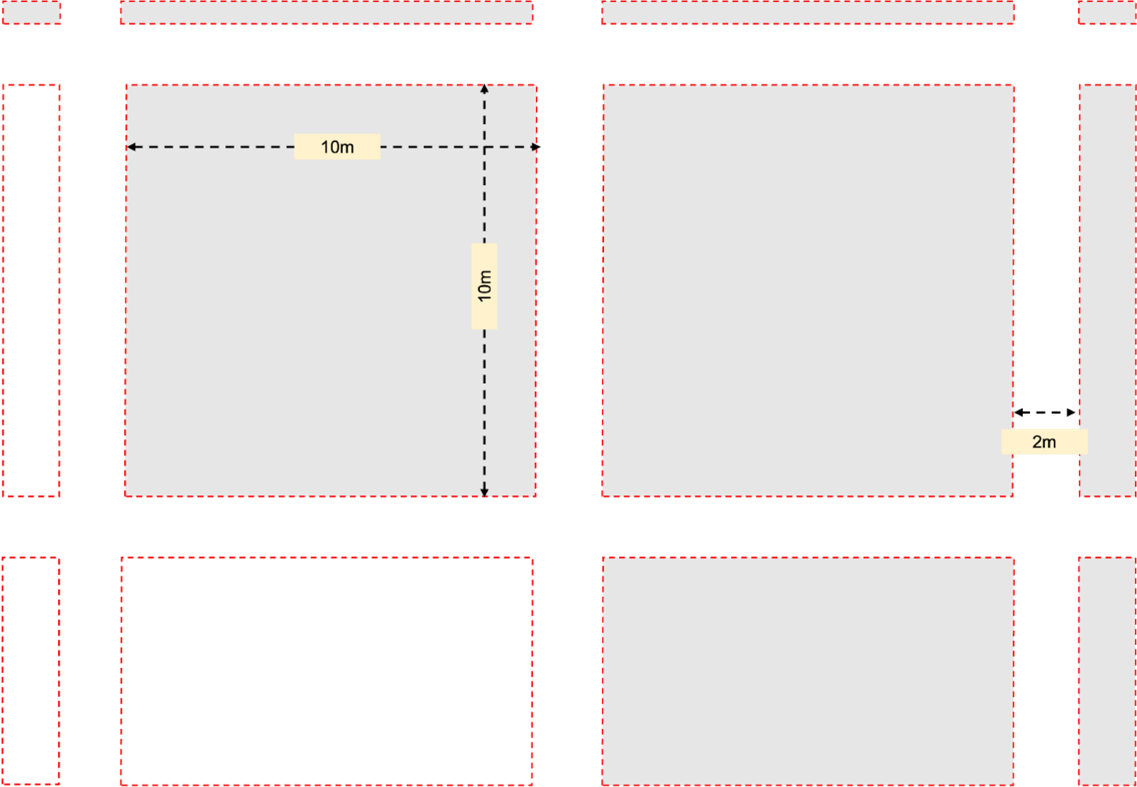
Figure 1 – Structure of 10m × 10m testing boxes with 2m-wide access lanes
The testing site may also be established without using the traditional 10m × 10m testing boxes, with test items placed and measured between clearly marked turning points (corners) surrounding the testing site.
Advantages of not using the traditional testing boxes are that:
- the test manager is afforded greater flexibility to arrange test areas according to the ADS organization’s specific requirements (for example, testing boxes, road clearance, vegetation, etc.);
- it provides the possibility to arrange “empty” test areas that cannot be “known” by the ADS units undergoing assessment;
- it minimizes the required total area for the test site, as the flexibility of layout reduces the need for access lanes as well as rest time between tests.
5.4 Test site security
Adequate security shall be established, maintained and monitored at the site to ensure that the validity of test site is preserved to satisfy public and property safety and security requirements.
If the test site has been subject to unauthorized intrusion, the site shall be thoroughly checked to ensure that it remains suitable for ADS units testing. Any aspects found to have been compromised in any way shall be corrected before restarting testing.
5.5 Vegetation cutting
Vegetation cutting on ADS test sites should be carried out using equipment and methods that will not disturb the ground and leave undesired scent traces from humans and tools on the ground. The same minimum time delay between vegetation cutting and survey/clearance used on field operations should be applied between vegetation cutting and testing on a test site.
5.6 Selection, storage, handling and use of test items and recognition pieces
5.6.1 General
All test items and recognition pieces should be located at least once a year using a metal detector, preferably after the period with the heaviest rain or snowfall. The locations should then be compared with records to ensure that no migration has occurred, and that no foreign items have been introduced to the testing box.
5.6.2 Selection
Test items shall be representative of EO that will be encountered during field operations. EO recovered during field clearance operations should be used as test items wherever possible. EO obtained from stockpiles or stores may be used as test items as an alternative.
5.6.3 Handling
Disposable gloves (preferably nitrile gloves or similar) should be worn at all times when handling test items. New gloves should be used for each new test item to prevent cross-contamination.
All test items, tools, accessories and recognition pieces shall be decontaminated prior to their use in a test area, using the available and approved method for achieving this.
All test items and recognition pieces shall be stored preventing contamination and cross-contamination from occurring.
5.6.4 Placing test items in testing boxes
The location of each test item within a testing box shall be irregular and unpredictable. The minimum distance between any two test items shall be 3m, to avoid the animal responding towards test items in adjacent testing boxes as much as possible.
Test items shall be buried at different depths representing the range of depths encountered under field operational conditions, as indicated by evidence from operational monitoring and information management systems and in accordance with required maximum clearance depth specified in NMAS. At least one test item should be surface-placed and accessible for the ADS unit during search to ensure correct indication behaviour for such test items.
The location of all test items in a testing box shall be recorded in the information management system to an accuracy within +/−5cm and shall be recorded on the test site map.
When burying test items:
- disposable gloves (preferably nitrile gloves or similar) or double plastic bags should cover the hands during any contact with the soil. If the hand protection splits during excavation, it should be immediately replaced;
- soil disturbance should be minimized. The top plug of soil should be kept in one piece if possible;
- surplus soil due to the added volume of the test item should be removed to outside the test site, and not spread inside the testing box or neighbouring testing boxes;
- the original soil should be used to fill around the test item. The top plug should be re-placed on top of the test item; and
- only decontaminated equipment should be used during the test site preparation and during handling of the test items.
5.6.5 Use of recognition pieces
When low- or zero-metal-content test items are used, the test site management shall ensure that recognition pieces are placed to allow confirmation of the location of test items with metal detectors, without the need to disturb the ground. Recognition pieces should be placed in a way to allow and facilitate accurate positioning of the centre of a test item.
The recognition pieces in use at a test site shall:
- all be made of the same material (such as cut reinforcing bar);
- not exceed a mass of 15g individually;
- be placed in the ground centrally under the test item; and
- be placed taking precautions to preserve the decontaminated status of the test piece and recognition piece.
Whenever recognition pieces are used in conjunction with one or more test items in a testing box, at least two additional recognition pieces shall be placed in the testing box at locations away from test items to confirm that ADS units are detecting the test item rather than the recognition pieces.
5.7 Soaking times after establishment of the test site
The required soaking time for testing ADS depends on the moisture in the soil and ground/air temperatures, which facilitates natural transportation of the target odour from the test item to the surface. Test items on ADS test site should have a minimum soak time of three months before use (although six months is recommended if practicable), in order to allow:
- the target odour to migrate to the soil surface, contaminate the topsoil, and start to evaporate into the air; and;
- any ground disturbance resulting from the burial of the test items to diminish.
In areas with little or no rain, the test site should be watered several times during the soak period. In areas with cold winters, the test items should be allowed to rest in the ground over the winter.
The same soak time is required for all test items, whether buried, partially buried or fully exposed. No buried test item should be moved or disturbed during the soak period.
6. Management of testing
6.1 General
All ADS operational tests shall be overseen by a competent and authorized test manager. Individual tests may be monitored by competent and authorized test monitors satisfying the monitoring competence requirements detailed in IMAS 07.40.
6.2 Provision of training areas
ADS organizations may wish to train and acclimatize their ADS units in a similar environment to the test site. In this case, the test manager shall ensure that the ADS organization is provided with a sufficiently large training area outside the immediate operational test site, established and prepared in the same way as the test site, and containing test items of the same type. The test monitor shall provide the ADS organization with details of training items and their coordinates.
Training shall not occur at any time in sites reserved for accreditation.
6.3 Frequency
Operational testing should be valid for a fixed period, normally 12 months. The period may be aligned with the duration of the agreement between the operator and the NMAA. Where the agreement extends marginally beyond the standard accreditation period, aligning the validity of operational testing with the agreement should be considered in order to avoid renewal immediately prior to the completion of operations.
The NMAA should require more frequent operational testing where significant changes occur in the operational setup, organizational structure or the personnel/animals employed.
6.4 Minimum test requirements
Time taken for an ADS unit to search a specific testing box should be recorded and may be used to extrapolate expected daily productivity during field operations. Assessed ADS units shall adhere to:
- the normal working procedures and practices of the ADS organization; and
- the prevailing circumstances and conditions.
The aim of the operational test is to provide confidence in the ability of an individual ADS unit to detect specified target objects with a defined minimum of false indications during land release operations. ADS units testing should adopt as a minimum accuracy criteria:
- in a clearance role, the ADS unit’s indications should be within 1m, measured from the centre of the test item. In circumstances where it is clear that the ADS unit is indicating, an absolute maximum buffer of 0.25m shall be allowed in addition to the 1m limit; and
- when testing an ADS unit for TS application, an appropriate maximum performance indication distances should be defined by the NMAA.
6.5 Actions before testing
Prior to testing, the ADS organization shall notify the test manager of any variations from the ADS organization’s SOPs necessary to meet test requirements. Any such variations shall be limited to the minimum necessary and should be agreed with the relevant accrediting body.
The test manager shall:
- review all relevant aspects of the SOPs of the ADS organization being tested, and clarify any areas of uncertainty;
- confirm that the intended test site is clear of any time restrictions relating to its previous use for testing;
- inspect the test site to ensure that it is properly prepared and ready for use;
- agree with the ADS organization that any proposed observers may observe the test;
- provide a test briefing to all test participants and any observers, covering, as a minimum, site working practices, procedures and safety precautions;
- design site layout, including administrative, test, rest and observation areas;
- establish restrictions on the movement of personnel during testing;
- strictly ensure that observers do not disturb or influence the conduct of the test; and
- agree with the ADS organization that weather and site conditions are satisfactory, in accordance with the ADS organization’s SOPs, for the test to proceed, and jointly document that agreement.
6.6 Conduct of testing
The test manager shall assign testing boxes to the ADS handler immediately prior to the operational test. The ADS handler shall have the right to inspect the testing boxes prior to the test, provided that the testing boxes are not physically entered or disturbed during the inspection.
Tests shall be monitored by the test manager or other competent and authorized test monitor. Monitoring of the tests shall be carried out so as to minimize distraction or disturbance of the animal during testing.
The test manager shall monitor testing and implement effective measures, such as the required rest time, search intervals to ensure that no animal indicates at a location in response to a previous indication by another animal at the same location.
The ADS handler may evaluate the wind direction and other environmental factors prior to the test in accordance with the ADS organization’s SOPs and decide the search direction. The ADS handler may change the search direction at any time.
The ADS handler may request to terminate the test if at any time they believe that the animal is suffering from a lapse in concentration or for some reason is not working properly. The ADS handler should be permitted to request a termination of the test for one animal and conduct a new test with a different animal, provided that the second animal can perform the complete test.
The test manager may terminate the test:
- when planned test activities are complete;
- for safety reasons;
- at the request of the ADS handler; and/or
- whenever there is any reason to doubt the continued validity of the test.
Repeated terminations of testing of an animal or ADS unit may be grounds to refuse/withdraw accreditation and should be subject to assessment by the test manager to determine appropriate action to retest the ADS unit or recommend other action.
Photos and videos of the test may be permitted by the test manager for monitoring and training purposes, provided that they do not interfere with the conduct of the test, nor make available information to ADS organizations that may compromise the validity of future tests.
6.7 Handler conduct
When testing short-leash MDDs, and where the operator’s SOPs specify that the handler follows the dog into the testing box as part of the working method, the handler shall be permitted to enter the testing box, walking behind the dog. Target marking shall be conducted next to the MDD in accordance with the SOPs, as illustrated in Figure 2. The handler shall not reward the dog or conduct any activities in areas within the box that have not been searched by the MDD. In the event of a correct indication, the testing manager may verbally inform the handler and authorize a reward. Such rewarding shall occur either outside the testing box or within an area of the testing box that has already been searched by the MDD.
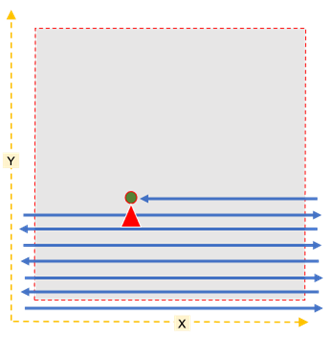

Figure 2 – Target marking while using short-leash MDD
When testing MDRs, long-leash MDDs and TSDs, the handler shall not enter the testing box at any time during the test. All handling and marking activities shall be conducted from the access lanes. On indication, the handler should mark the location on the X and/or Y axes from within the access lane (as illustrated in Figure 3). The handler shall not reward the animal or conduct any activities within the testing box. In the event of a correct indication, the testing manager may verbally inform the handler and authorize a reward. Such rewarding shall occur on the access lane and not within the testing box.
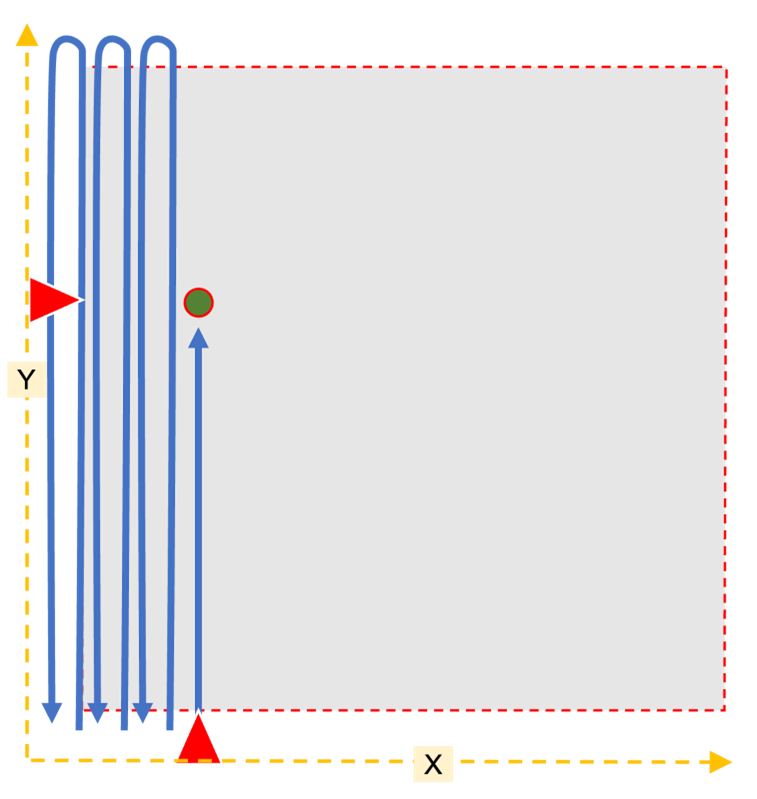

Figure 3 – Indication marking for MDRs, long-leash MDDs and TSDs.
6.8 Required number of test items
Throughout the test of a single ADS unit, the overall test area shall contain a minimum of three test items. Each individual testing box shall contain zero, one or two test items, but in no case shall a testing box contain more than two items. Overall, the maximum number of test items across the whole testing area for a single ADS unit shall not be more than five.
6.9 Maximum number of false indications
A maximum of three false indications shall be permitted during a single operational test of an individual ADS unit. If an ADS unit records more than three false indications before completion of the test, the test shall be terminated, and the unit shall be deemed to have failed.
6.10 Action on indication and false indication
An “indication” is the point identified by the handler as the animal’s indication point.
A “false indication” is when the animal indicates on the presence of a test item, while none actually exists within a radius of 1.25m.
A “miss” is when the animal has searched inside the testing box containing the test item but has not indicated within a radius 1.25m of the test item.
If an ADS unit passes a test item in a lane without indicating, the search shall continue for three additional lanes. If, after completing the three additional lanes, the ADS unit has not indicated correctly, the test shall be terminated (as illustrated in Figure 4). The testing manager may, however, allow the ADS unit to complete the current testing box before stopping the test.
A “correct indication” in a testing box with a test item is an indication within 1.25m of the test item’s centre. Following a correct indication, the search in that testing box may be terminated by the testing manager, and the ADS unit shall be allocated to the next testing box. If the testing manager decides that the ADS unit should continue searching the testing box, the animal shall be moved forward at least 2m before resuming the search.
If, during the search, the animal returns to a previous target, this is considered natural behaviour and shall not be treated as a nonconformity.
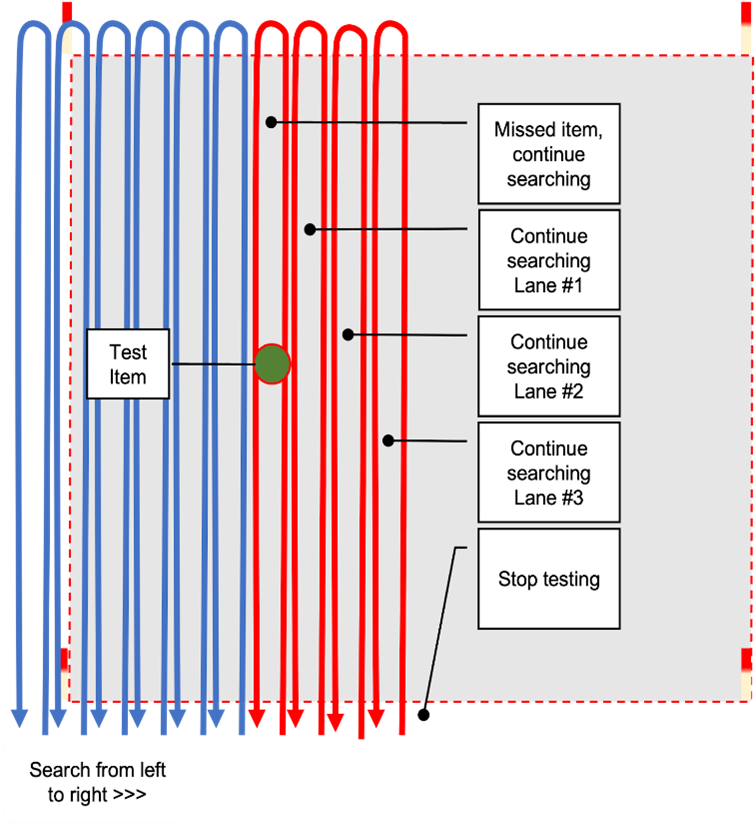

Figure 4 – Example of ADS search while missing a test item
Testing shall continue until one of the following conditions is met:
- the ADS unit has indicated on all test items correctly, without missing any test item and with no more than three false indications;
- the ADS unit has missed a test item; or
- the ADS unit has given four false indications.
6.11 Required size of test site
The size of the testing site shall be at least 400m2 to 500 m2 for MDD, and 200m2 to 250m2 for MDR. This corresponds to approximately 50% to 62.5% of the average daily productivity of each animal under operational conditions, with MDD expected to search 800m2 per day and MDR expected to search 400m2 per day.
6.12 Reuse of testing boxes
Following a correct indication on a test item, the minimum required rest time before the testing box can be reused for another ADS unit is seven days. The time may be reduced to a period of no less than two days if the site experiences weather conditions, including periods of rain and sunshine or water sprinkling during that time.
The test manager may decide that any testing box with no test items and where there were no indications of the previously tested ADS unit, may be reused immediately.
6.13 Results of testing
The ADS unit shall indicate all test items in a test area.
The ADS unit shall provide no more than three false indications during the entire test.
The ADS unit should comply with the mine action organization’s SOPs (including any variations previously agreed to satisfy test requirements).
Scratching or physically, actively manipulating the surface or the test item during an indication is a fail criterion for MDD, while this behaviour is permitted for the much lighter MDR.
The test manager may additionally provide observations to the ADS organization, as defined in IMAS 07.40. Observations do not constitute a test fail or quality nonconformity in themselves but may highlight aspects of performance during the test that may benefit from review by the mine action organization and possible improvement action.
6.14 Acknowledgement of test results
The documented record of test results should include the signatures of the ADS handler, test manager or monitor, and any comments on the results of the test, including acceptance of the results or any appeal against the results lodged by the ADS organization.
6.15 Right of appeal
On completion of the test, the ADS organization should have the right to appeal a test result if it believes that an indication assessed to be false was in fact correct. The test manager, or authorized monitor, should inspect the site and compare the location of the animal’s indications with the recorded locations of test items and the documented pass criteria. Any indication assessed on appeal to be correct rather than false shall be disregarded from the test results.
The NMAA should ensure that a higher authority is identified and available for further recourse in the event that an ADS organization does not accept the result of an appeal and wishes to elevate the matter.
6.16 Follow up action
6.16.1 General
Following a pass result, the test manager should confirm to the mine action organization the date by which the next test of the ADS unit shall be completed to satisfy accreditation requirements.
A fail result should be treated as a nonconformity and managed in accordance with the requirements of IMAS 07.12 and IMAS 07.40. Root cause analysis should be carried out considering all aspects of the animal/handler relationship and the influence of other parts of the mine action organization’s systems and procedures, to identify any necessary corrective and improvement actions required on the part of the mine action organization.
Agreed actions, and readiness to submit an ADS unit, individual handler or animal for retesting, should take into account the different natures of the relationships between handler and animal depending on the species of the animal. In particular, dogs should have a unique relationship with a handler, and be tested in that combination, whereas rats may be tested in combination with any handler.
Retesting of the ADS unit, individual handler or animal should only take place once the ADS organization has implemented and confirmed the effectiveness of agreed corrective and improvement actions.
6.16.2 Records
Comprehensive records are essential to ensure the integrity, transparency and reproducibility of testing and accreditation processes for ADS. Records provide evidence of compliance with IMAS requirements, support effective monitoring and quality assurance, and safeguard the reliability of results. At a minimum, records shall cover information relating to the test site, testing activities and the security of sensitive data.
6.16.3 Records of the test site
Records of the test site shall include, as a minimum:
- a map of the test site showing: prominent topographic features; the boundaries of the test site; testing box numbers, if applicable; boundaries of the testing boxes, if applicable; benchmarks; administration areas; and relevant supplementary information, such as the prevailing wind direction;
- a map of each testing box showing: the testing box or lane number; the exact location of the testing box/lane markers; reference to bench marks; the location of the test items; the depth, type and state of each test item; any recognition pieces located under the test items and elsewhere in the testing boxes; details of the people responsible for the preparation of the testing box; and the date when the testing box was prepared;
- the details of the initial soak time period following initial preparation of test areas;
- a schedule of testing, including rest times following each use of testing boxes;
- the results of test site inspections to confirm suitability and readiness for testing; and
- the results of internal and external monitoring of the test site, in accordance with IMAS 07.40.
6.16.4 Records of testing
Records of testing shall include, as a minimum:
- the date and time of testing;
- the ADS organization subject to test;
- the name and/or unique identifying reference of handlers and animals subject to testing;
- the identification of the test area associated with each animal and/or handler;
- the weather conditions and other relevant environmental factors during the test;
- the results of the test;
- the signatures of test manager/monitor and handler;
- any appeals and the results of those appeals; and
- the credentials of test managers and monitors;
Additionally, for internal use only by the test site management, the location of all indications, true and false, made by the animal during the test.
6.16.5 Security of records
Records identifying the location and number of test pieces within test sites shall be kept securely and only made available to those members of the test site management who need to know the information. Individuals who have access to records detailing test piece locations and numbers should have no affiliation to any ADS organization that will be tested at the site.
6.17 Monitoring and improvement of testing
All activities at the test site shall be subject to monitoring in accordance with IMAS 07.
Authorities and test site management shall implement effective measures to ensure that opportunities for improvement are identified, assessed and, where appropriate, acted upon.
7. Responsibilities
7.1 National mine action authority
The NMAA, or organization acting on its behalf, shall:
- establish systems, procedures and facilities for the operational testing of ADS operating within the mine action programme in accordance with the specifications and guidelines included in this standard;
- provide ADS organizations with test items for training and provide training area within the accreditation area;
- accredit and appoint an ADS operational testing authority to include a suitably qualified and experienced test manager who will manage ADS operational testing on behalf of the NMAA in accordance with the procedures established by the NMAA and relevant national standards;
- produce standard working procedures for the operational test site;
- identify an individual or organization responsible for dealing with appeals from ADS organizations; and
- monitor the work of the ADS operational test authority and ensure that the operational testing system is applied in a fair and equitable manner, and that planning has taken place to ensure that the requirements for operational tests do not interrupt or delay land release operations.
The NMAA, or organization acting on its behalf, should conduct periodic external quality assurance audits on the ADS operational testing authority.
7.2 Test site management
The test site management shall:
- prepare the test site in accordance with the requirements set out in this standard;
- manage testing of ADS units objectively and impartially, and in accordance with the requirements set out in this standard;
- promptly provide results of tests to ADS organizations;
- maintain records of the test site and of testing;
- maintain adequate and appropriate security of test site data;
- make test results and the analysis of those results available to other stakeholders as directed by the NMAA;
- implement an effective internal QM system; and
- comply with the requirements for external quality monitoring as directed by the NMAA.
7.3 ADS organization
The ADS organization shall:
- establish SOPs for the use of ADS in land release operations that are consistent with relevant national standards or, in the absence of national standards, with IMAS;
- make a copy of the ADS organization’s SOPs available to the test manager;
- agree any variations to SOPs necessary to satisfy test requirements with the test manager and accrediting authority;
- assist any appointed ADS operational testing authority with the establishment of systems, procedures and facilities for the management of ADS operational testing; and
- cooperate with the appointed ADS operational testing authority in the management and maintenance of national ADS test sites.
In the absence of a NMAA, the ADS organization should assume additional responsibilities. These include, but are not restricted to:
- assisting the host nation, during the establishment of a NMAA, in the development of systems, procedures and facilities for the operational testing of ADS; and
- in cooperation with other ADS organizations, carrying out their own testing of ADS in accordance with the requirements of this standard.
Annex A (Normative) References
- IMAS 04.10, Glossary of mine action terms, definitions and abbreviations
- IMAS 07.12, Quality management in mine action
- IMAS 07.30, Accreditation of demining organizations
- IMAS 07.40, Monitoring of mine action organizations
- IMAS 09.40, Animal detection systems – principles, requirements and guidelines
- IMAS 09.41, Operational procedures for animal detection systems
- IMAS 09.44, Guide to occupational health and general animal detection systems care
- TEP 07.31/01/2022, Setting of animal detection systems testing sites
- TEP 07.31/02/2022, Competencies required for animal detection systems (ADS) handlers, team leaders and instructors
Amendment record
Management of IMAS amendments
The IMAS series of standards are subject to formal review on a five-yearly basis. However, this does not preclude amendments being made within these five-year periods for reasons of operational safety and efficiency or for editorial purposes.
As amendments are made to this IMAS they are given a number. The date and general details of the amendment shown in the table below. The amendment is also shown on the cover page of the IMAS by the inclusion under the edition date of the phrase “incorporating amendment #.”
As the formal reviews of each IMAS are completed, new editions may be issued. In this case, amendments up to the date of the new edition are incorporated into the new edition and the amendment record table cleared. Recording of amendments then starts again until a further review is carried out.
The most recently amended IMAS are posted on the IMAS website at www.mineactionstandards.org.
